
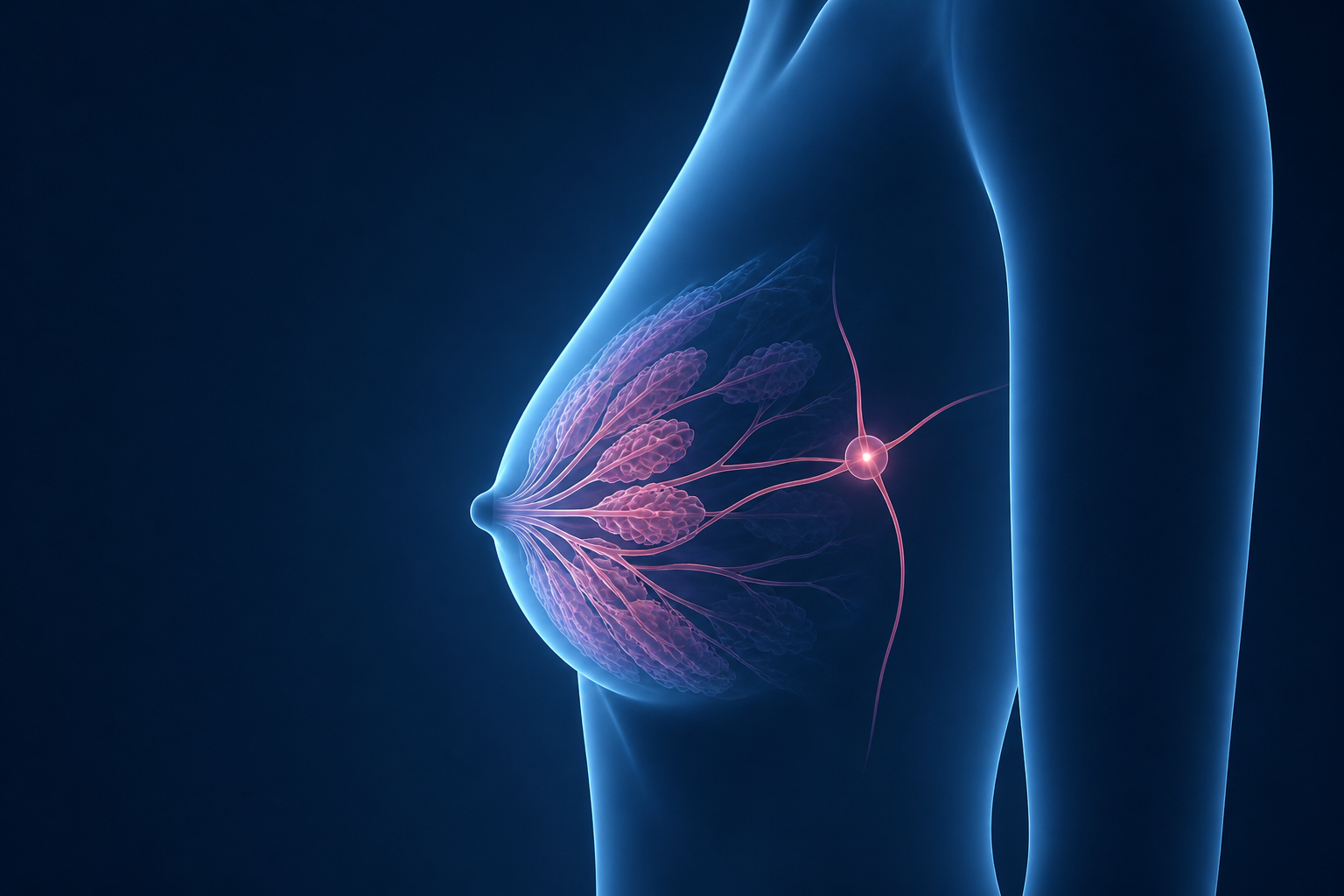
Quick Answer
- Nipple discharge is the third most common breast complaint after lumps and pain.
- The vast majority of cases are caused by benign (non-cancerous) conditions.
- Breast cancer accounts for less than 10% of nipple discharge cases in women.
- Discharge that is spontaneous, from one breast only, bloody, or clear requires prompt medical evaluation.
What Is Nipple Discharge?
Nipple discharge refers to any fluid that comes out of the nipple. It is classified as either:
- Physiological (normal) - occurs only when the nipple is squeezed or stimulated; usually affects both breasts; often milky or cloudy. Does not typically require further workup beyond routine screening.
- Pathological (abnormal) - occurs spontaneously without squeezing; may be from one breast only or from a single duct; may be clear, bloody, or blood-tinged. This type warrants imaging and evaluation.
Nipple discharge is always considered abnormal in men, carrying a risk of malignancy of 25–57%, so any man experiencing nipple discharge should be evaluated urgently.
Common Causes
Benign (most common):
- Intraductal papilloma - a small, non-cancerous growth inside a milk duct; the most common cause of spontaneous bloody discharge without a lump
- Mammary duct ectasia - widening and inflammation of the milk ducts, often causing thick, greenish, or multicolored discharge
- Fibrocystic breast changes - benign lumpy breast tissue that can cause milky, serous, or green discharge
- Galactorrhea - milky discharge unrelated to breastfeeding, often from elevated prolactin levels
- Breast infection or abscess - can produce pus-like discharge
Hormonal / medical causes:
- Pregnancy or recent breastfeeding
- Hypothyroidism (underactive thyroid)
- Prolactinoma (a benign pituitary gland tumor)
- Certain medications - antipsychotics, antidepressants, blood pressure medications, opioids
Less common - malignant causes:
- Ductal carcinoma in situ (DCIS)
- Invasive ductal carcinoma
- Paget's disease of the breast
When Should You Get It Checked?
Get evaluated promptly if your discharge:
- Occurs spontaneously- without squeezing or stimulating the nipple
- Comes from only one breast
- Comes from a single duct opening on the nipple
- Is bloody, clear, or watery
- Is visibly staining your bra or clothing
- Is persistent and not going away
- Is associated with a lump anywhere in the breast
- You are postmenopausal
- You are male
- Is accompanied by nipple inversion
How Doctors Evaluate It
- History and physical exam - color, consistency, whether it's spontaneous or pressure-induced, which breast is affected, and medication review
- Discharge analysis - may be tested for blood and examined under a microscope for abnormal cells
- Blood tests - prolactin and thyroid hormone levels if galactorrhea is suspected
- Mammogram - first-line imaging for women over 30 with pathological discharge
- Breast ultrasound - better at identifying dilated ducts and intraductal lesions
- Breast MRI - used when mammogram and ultrasound are negative but discharge remains suspicious
- Biopsy or surgical duct excision - if imaging identifies a growth, or for persistent pathological discharge with no clear imaging finding
What Happens Next?
Common Questions About Nipple Discharge
These are the most common questions patients have about nipple discharge.
1. My discharge is clear or watery - could it be cancer?
Clear, watery, or pale yellow discharge can be associated with cancer, particularly when it is spontaneous and from one breast only. The color alone doesn't tell the whole story - it is the combination of features (spontaneous, unilateral, single duct, persistent) that makes discharge suspicious. Clear discharge requires the same evaluation as bloody discharge.
2. I squeezed my nipple and fluid came out. Is this normal?
Many women can produce small amounts of discharge by pressing firmly on their nipples - this is generally considered physiological and lower risk. Doctors advise against routinely squeezing your nipples to check for discharge, as this can stimulate production. If you notice discharge spontaneously staining your bra or clothing, that is different and should be evaluated.
3. I stopped breastfeeding 8 months ago and still have milky discharge. Should I be worried?
Milky discharge after stopping breastfeeding can persist for up to a year or more as the body's hormones normalize. However, if it continues beyond 12 months, is very heavy, or comes with headaches or vision changes (which can indicate a pituitary tumor), mention it to your doctor so prolactin levels can be checked.
Related Breast Topics
Have a breast imaging report? A board-certified radiologist with extensive experience in breast imaging reviews every explanation before it reaches you.
Get My Report ExplainedThis service provides educational explanations of radiology reports and does not constitute medical advice, diagnosis, or treatment. Medical decisions should always be made in consultation with your physician.