
The Critical Question: Is Atypia Present?
Papilloma Without Atypia
Upgrade rate to malignancy. Observation may be acceptable if fully sampled - but excision is more commonly recommended.
Papilloma With Atypia
Upgrade rate to malignancy. Surgical excision is the standard recommendation at all institutions.
The presence or absence of atypia on your biopsy report is the single most important factor in determining your management. Check your pathology report for these words: "papilloma without atypia" vs. "papilloma with atypia" or "papilloma with ADH."
What Exactly Is a Papilloma?
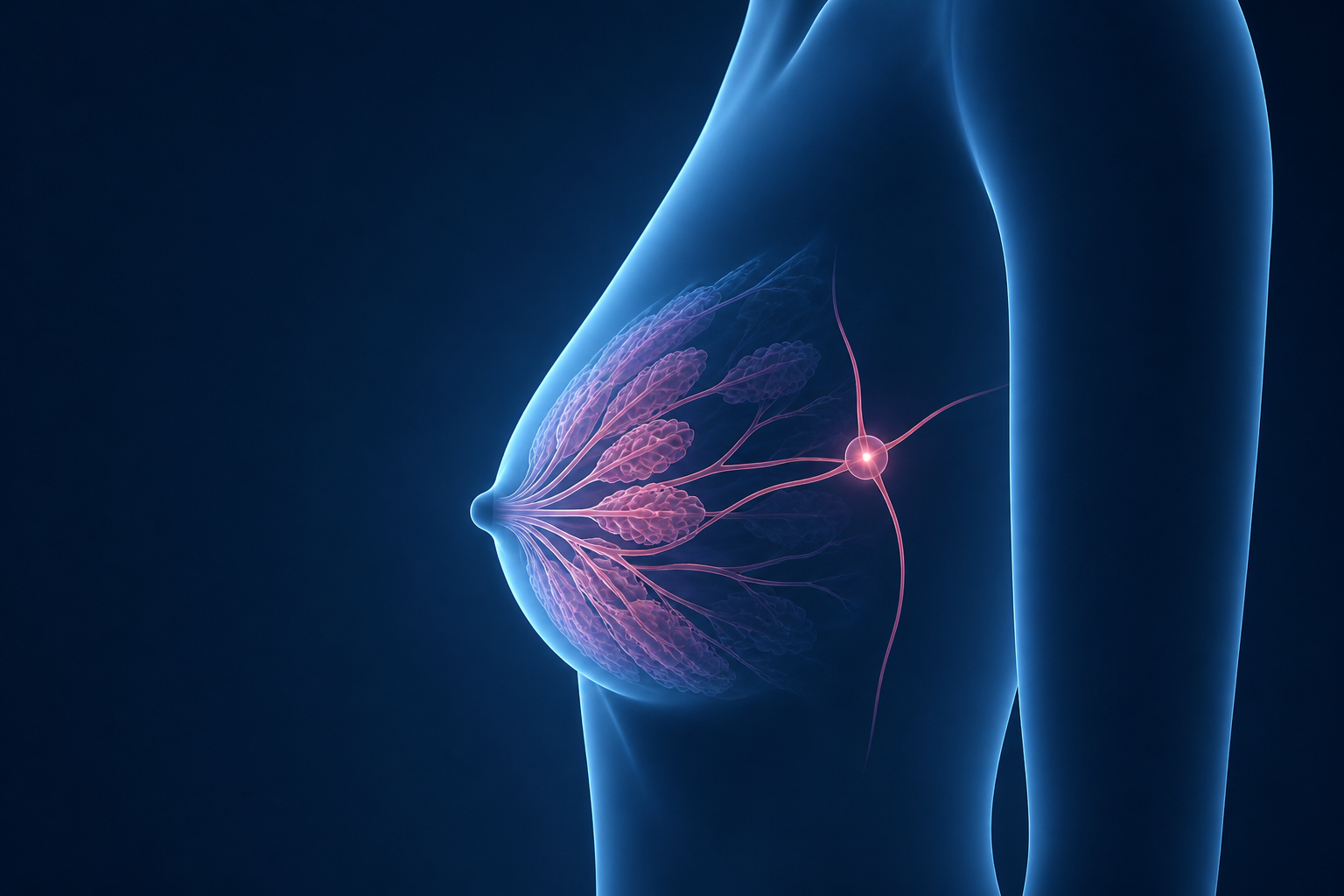
A papilloma is a benign epithelial growth within the walls of a breast duct, forming a small finger-like or frond-like projection into the duct lumen. These growths can cause nipple discharge - often clear or bloody - when they bleed or produce fluid within the duct.
Central vs. Peripheral Papillomas
Solitary Central Papilloma (near the nipple)
Located in the large ducts near the nipple - the classic cause of nipple discharge. Generally considered lower risk. Upgrade rate without atypia: approximately 3–7%.
Peripheral Papillomas (smaller ducts, multiple)
Found farther from the nipple, often multiple, and more commonly incidental imaging findings. More often associated with atypia and elevated long-term risk. Surgical excision recommended when atypia is present.
What Happens Next
Some institutions accept surveillance; excision is more commonly recommended.
Residual lesion indicates incomplete sampling.
Do not delay. Upgrade rate of 15–30% makes excision the standard of care.
Performed for both diagnosis and relief of symptoms.
Return to standard screening schedule.
Oncology referral and staging.
When Should I Be Concerned?
Seek prompt attention if:
- Atypia is found on your papilloma biopsy - surgical excision should not be delayed
- You have persistent or worsening nipple discharge - particularly if spontaneous, from one duct opening, or bloody
- You have multiple peripheral papillomas found on biopsy
- A biopsy is recommended and you have not yet scheduled it
Related Topics
Does your biopsy report mention a papilloma? The critical next step depends entirely on whether atypia is also mentioned. A board-certified radiologist with subspecialty breast imaging experience can walk you through it step by step.
Get My Report Explained