
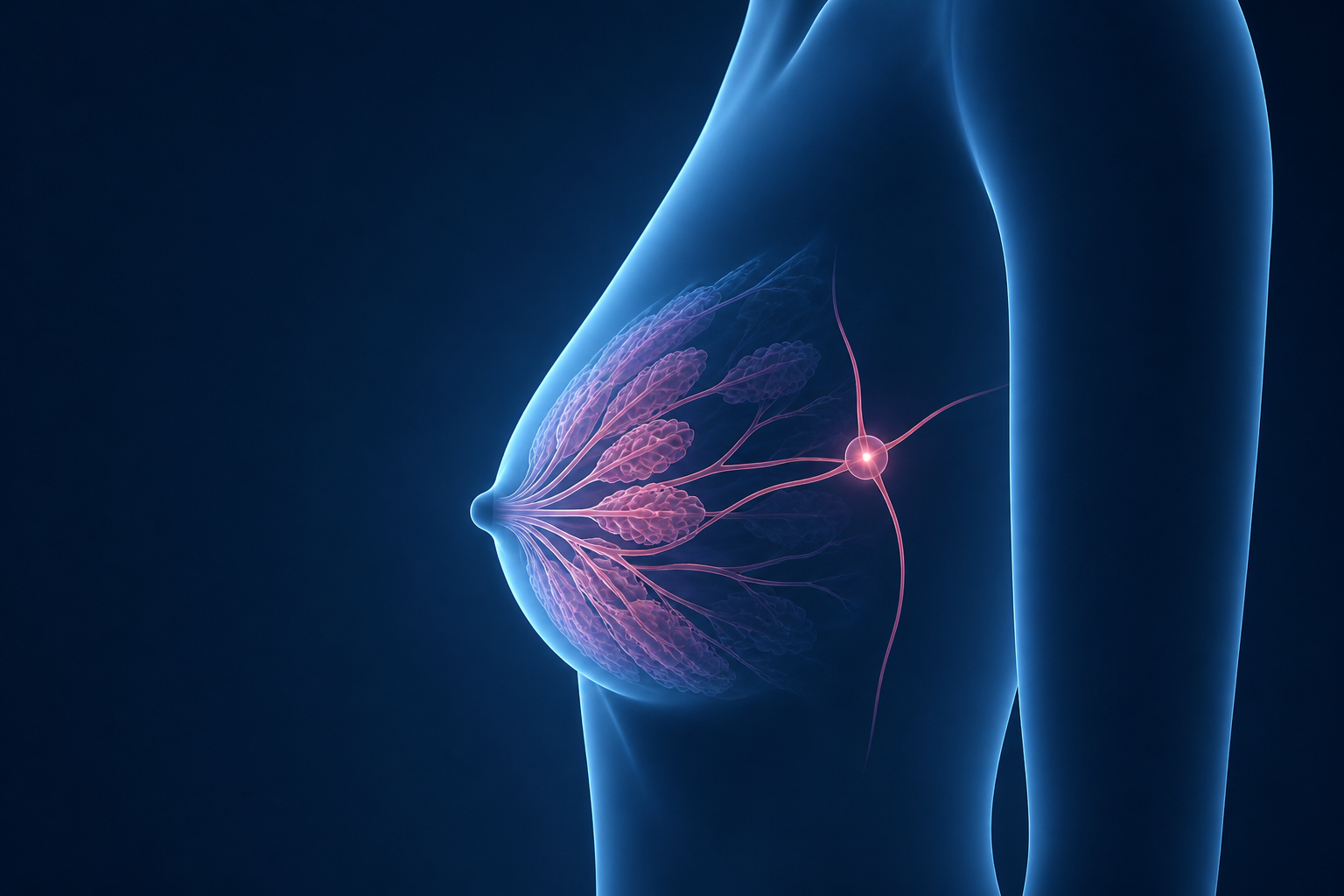
Where ALH Fits - The Lobular Neoplasia Spectrum
Lobular Neoplasia Spectrum
ALH and LCIS are the same type of abnormal cell - the difference is quantity. ALH fills less than 50% of the lobular units involved. LCIS fills more than 50%. Both are risk markers, not cancer.
What Exactly Is ALH?
ALH is a hyperplasia - an overgrowth of cells - located in the lobules (the small milk-producing glands at the end of each duct). The cells in ALH are abnormal: small, round, uniform, and non-cohesive. ALH is almost always found incidentally - discovered when a biopsy was performed for a different imaging finding.
ALH is a pathology finding - the radiologist's role after an ALH diagnosis is radiologic-pathologic correlation: does the ALH finding explain the imaging target that prompted the biopsy?
Concordance - Why It Matters
Concordant
The ALH finding adequately explains the imaging target. Close imaging surveillance may be acceptable - discuss with your breast surgeon. Some institutions still favor excision.
Discordant
The ALH finding does not explain the imaging finding that triggered the biopsy - meaning something else may have been missed. Surgical excision is recommended.
Key Numbers
Upgrade rate to DCIS or invasive cancer at surgical excision
Elevated lifetime breast cancer risk - in both breasts equally
Important distinction: The elevated cancer risk from ALH affects both breasts equally - not just the breast where ALH was found. This bilateral risk is a key reason why enhanced surveillance and risk-reduction strategies are discussed regardless of which breast was biopsied.
What Happens Next
Discuss with your breast surgeon whether surveillance or surgical excision is right for your specific situation.
Excision ensures no adjacent cancer was missed by the biopsy needle.
Risk reduction discussion (chemoprevention) should occur regardless of excision result.
Occurs in approximately 5–10% of cases.
MRI screening considered if overall lifetime risk reaches 20% or above.
When Should I Be Concerned?
Act promptly if:
- Surgical excision is recommended - understand the rationale clearly before deciding
- You have additional risk factors (family history, dense breasts, prior ADH)
- You have not been offered a discussion about risk reduction strategies (chemoprevention, enhanced MRI screening)
Related Topics
Does your biopsy report mention ALH? The key question is whether it was concordant with your imaging finding and what the recommended next step is. A board-certified radiologist with subspecialty breast imaging experience can walk you through it step by step.
Get My Report Explained