
Quick Answer
- Nipple changes can range from completely harmless to an early warning sign that warrants prompt attention.
- The key question is: is this new?
- Nipples that have always looked a certain way (e.g., lifelong inversion) are typically not a concern.
- A nipple that has recently changed - inverting, developing a rash, or changing shape - should be evaluated by a doctor.
What Are Nipple Changes?
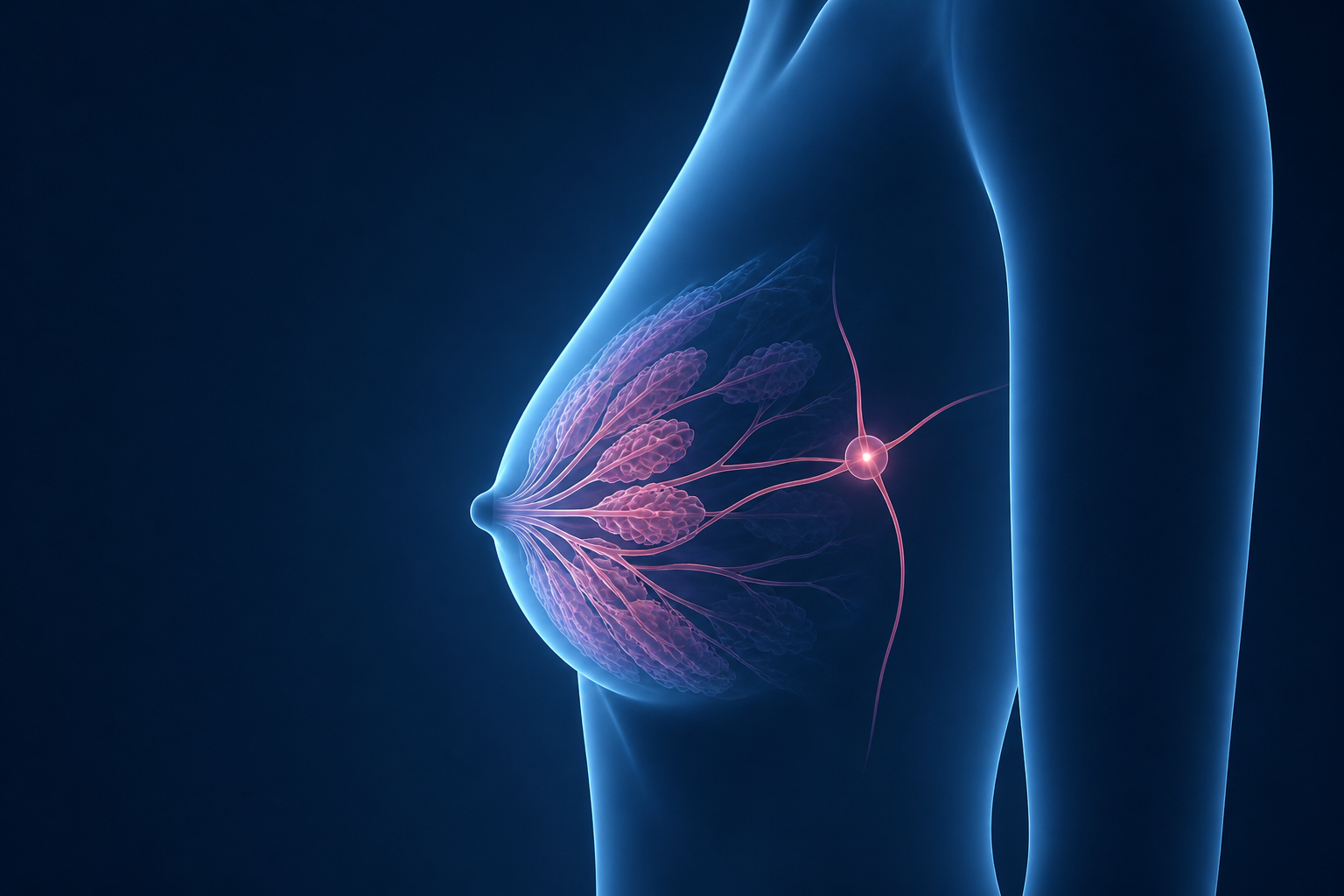
"Nipple changes" is a broad term for any visual, textural, or physical change affecting the nipple or surrounding areola. These changes include:
- Nipple inversion or retraction - the nipple turns inward or lies flat instead of pointing outward
- New retraction in a previously everted nipple - a nipple that previously protruded normally is now pulling inward
- Skin changes on the nipple/areola - redness, scaling, crusting, thickening, weeping, or ulceration
- Change in nipple position or direction
- Change in nipple size or shape - new asymmetry between nipples
- Persistent itching, burning, or tenderness
- Rash on or around the nipple - especially one that does not respond to standard creams
Common Causes
Benign causes (most common):
- Congenital (lifelong) inverted nipples - up to 20% of people are born with inverted nipples due to short milk ducts or tight connective tissue; not a health concern
- Aging - as estrogen declines toward menopause, milk ducts may shorten and cause the nipple to flatten or pull inward
- Pregnancy - hormonal changes cause significant changes including darkening, enlargement, and projection changes
- Duct ectasia - widening and inflammation of the ducts beneath the nipple can cause retraction or discharge
- Fat necrosis - scar tissue from a previous breast injury or surgery can cause nipple pulling
- Periductal mastitis - inflammation around the milk ducts (strongly associated with smoking)
Conditions requiring medical evaluation:
- Breast cancer - a tumor growing near or behind the nipple can pull it inward through fibrous tissue; this is called acquired nipple inversion and is a recognized sign of breast cancer when it is new, one-sided, and the nipple cannot be pulled back out
- Paget's disease of the breast - a rare form of breast cancer (about 1–2% of all breast cancers) that starts in the nipple, presenting as a persistent scaly, red, or crusted rash that may look like eczema but does not respond to skin creams
When Should You Get It Checked?
See a doctor promptly if you notice:
- A newly inverted or retracted nipple in an adult - especially if the nipple cannot be pulled out
- Inversion that is only on one side
- Persistent redness, scaling, crusting, or thickening of the nipple skin
- A rash on the nipple that does not improve with moisturizer or mild steroid cream within 1–2 weeks
- The nipple is pointing in a new or different direction
- Itching or burning of the nipple that is persistent and unexplained
- Any nipple change accompanied by a lump, discharge, or other breast changes
- Any nipple change in a man
Paget's disease is frequently mistaken for eczema. If a rash on your nipple is not responding to standard treatment within 2 weeks, insist on further evaluation.
How Doctors Evaluate It
- Clinical history - whether the change is new or lifelong, which breast(s) are affected, associated symptoms, and personal/family history of breast cancer
- Clinical breast exam - visual inspection, grading of inversion, feeling for lumps or thickening behind the nipple, examination of lymph nodes
- Skin biopsy of the nipple - if a rash or scaling is present and Paget's disease is suspected, a small punch biopsy provides a definitive diagnosis
- Mammogram - to look for any underlying mass or calcifications, particularly if the change is new
- Breast ultrasound - useful for evaluating tissue directly behind the nipple and identifying dilated ducts or masses
- Breast MRI - used when mammogram and ultrasound are inconclusive, or when there is strong suspicion of cancer not visible on standard imaging
What Happens Next?
Common Questions About Nipple Changes
These are the most common questions patients have about nipple changes.
1. I've always had inverted nipples. Do I need to worry?
Lifelong (congenital) inverted nipples are very common, affecting up to 20% of people. If your nipple(s) have been inverted since puberty and nothing has changed, this is almost certainly a normal variation and not a cause for concern. No testing is needed unless you notice a new change or other symptoms.
2. My nipple has started pulling inward over the past few months. What should I do?
Newly acquired nipple inversion in an adult - particularly when it is only on one side and the nipple cannot be pulled back out - always warrants medical evaluation. While it can be caused by benign conditions like duct ectasia, it is also a recognized sign of breast cancer. See your doctor promptly so imaging can be arranged.
3. Could a rash on my nipple be Paget's disease?
Paget's disease of the breast is rare (1–2% of all breast cancers) but often looks like eczema or skin irritation. Key differences: Paget's disease typically affects only one nipple, does not improve with moisturizers or mild steroid creams, and may gradually spread to the areola. If you have a persistent nipple rash that hasn't improved after 1–2 weeks of basic skincare, ask your doctor for a formal evaluation and biopsy.
Related Breast Topics
Have a breast imaging report? A board-certified radiologist with extensive experience in breast imaging reviews every explanation before it reaches you.
Get My Report ExplainedThis service provides educational explanations of radiology reports and does not constitute medical advice, diagnosis, or treatment. Medical decisions should always be made in consultation with your physician.