
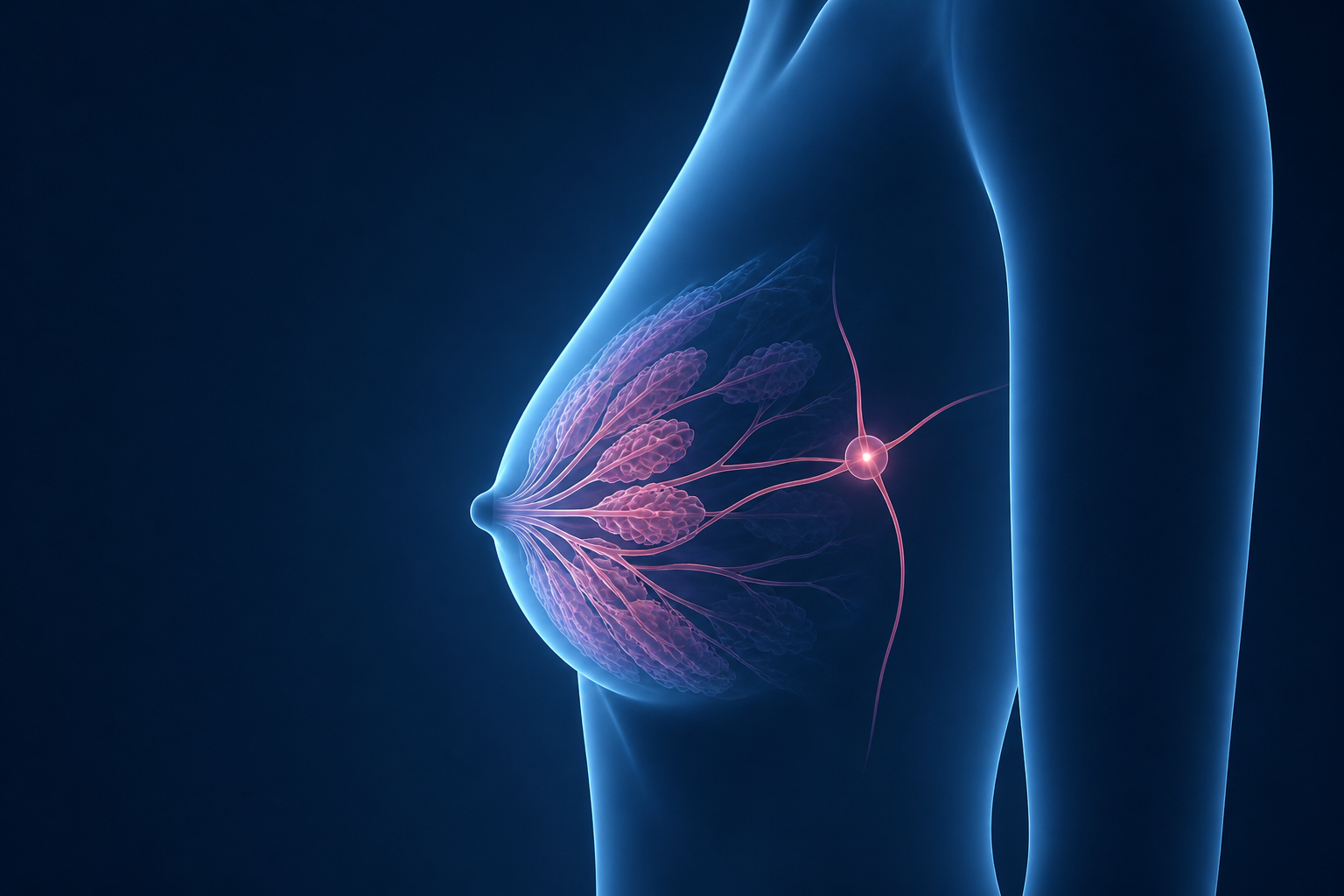
Fat necrosis is not cancer. It is entirely benign. Because its imaging appearance can closely mimic breast cancer, biopsy is sometimes required - not because cancer is expected, but to confirm with certainty that the finding is benign.
What Exactly Is Fat Necrosis?
Fat necrosis occurs when fat cells in the breast lose their blood supply, die, and are replaced by scar tissue, fluid, or calcium deposits. It is most commonly seen after lumpectomy and radiation therapy, core needle biopsy, blunt trauma (seatbelt injury, sports impact), breast reduction or reconstruction, or occasionally spontaneously.
The challenge is that fat necrosis spans a wide imaging spectrum - from obviously benign (a classic oil cyst) to frankly suspicious (a spiculated mass that can appear identical to invasive cancer).
⚠ Always provide your complete surgical history to your imaging facility. Knowing about prior lumpectomy, biopsy, trauma, or reconstruction is the most important tool for correctly interpreting these findings and avoiding unnecessary procedures.
Reassuring vs. Concerning Features
✓ Reassuring Features
- Location directly at or near a known lumpectomy site or biopsy scar
- Classic oil cyst appearance - round lucent lesion on mammogram
- "Eggshell" or rim calcifications
- MRI signal that follows fat on all sequences
⚠ Concerning Features
- Spiculated margins identical to invasive cancer
- Irregular enhancement on MRI
- New or enlarging finding not explained by a prior procedure
- Fine, pleomorphic calcifications
Types of Fat Necrosis on Imaging
Oil Cyst
Round or oval lucent mass on mammogram, often with eggshell calcification. BI-RADS 2 - definitively benign. No biopsy needed. Classic post-traumatic or post-surgical appearance.
Dystrophic Calcifications
Coarse, irregular calcium deposits in scar tissue. Classic post-lumpectomy/radiation feature. BI-RADS 2 when the pattern is recognized.
Spiculated Mass
Dense fibrous scar tissue with radiating lines. Can be indistinguishable from cancer on imaging. Biopsy frequently required even when prior surgery is known.
Solid Mass with Irregular Margins
Fibrotic fat necrosis forming a solid-feeling lump. May also require biopsy to confirm benign diagnosis.
What Happens Next
Return to routine annual surveillance mammography.
Imaging repeated to confirm stability.
Biopsy is needed to confirm the benign diagnosis.
Return to routine screening.
When Should I Be Concerned?
Seek prompt evaluation if:
- A finding is in a new location not explained by prior surgery or trauma
- A known area of fat necrosis is growing rather than stabilizing
- Your imaging report assigns BI-RADS 4 or 5
- The lump is painful, hardening, or associated with skin changes
Related Topics
Does your report mention fat necrosis, an oil cyst, or post-surgical changes? This describes a benign scar-related process - but the imaging appearance determines whether biopsy is needed. A board-certified radiologist with subspecialty breast imaging experience can walk you through it step by step.
Get My Report Explained