
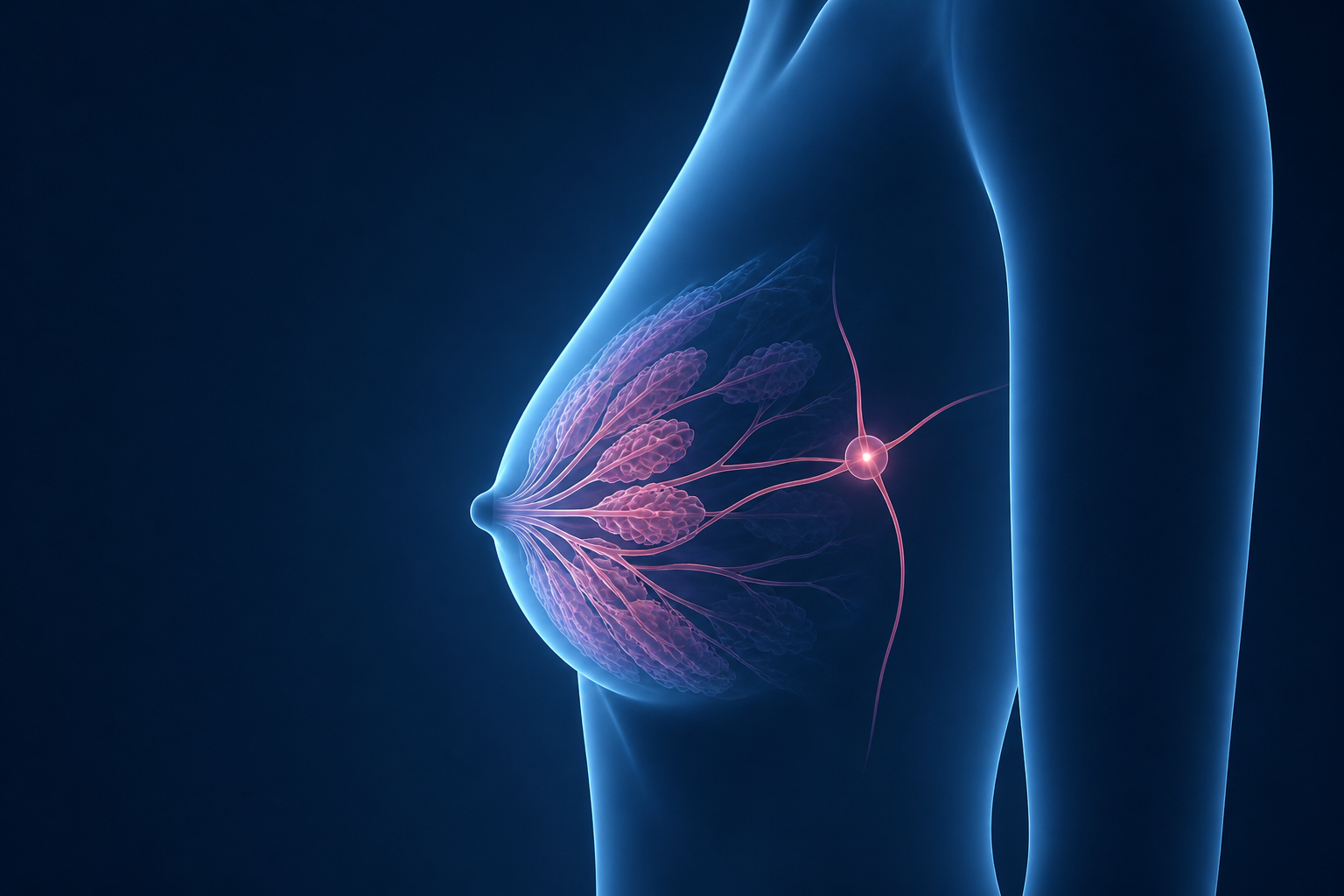
A typical intramammary lymph node with a visible fatty hilum is BI-RADS 2 - definitively benign. The key phrase to look for in your report is "fatty hilum." If it's there, no follow-up is needed - just return to routine annual screening.
What Exactly Is an Intramammary Lymph Node?
An intramammary lymph node is simply a lymph node that happens to be located inside the breast tissue rather than in the armpit (axilla). Most are found in the upper outer portion of the breast. On a mammogram or ultrasound, a normal intramammary lymph node has a characteristic appearance that allows a radiologist to recognize it confidently as benign.
The Most Important Feature: The Fatty Hilum
The fatty hilum is a central area of fat density within the lymph node - visible as a bright (lucent) spot on mammogram. A kidney-bean shaped node with a visible fatty hilum is the hallmark of a normal, benign lymph node. The fatty hilum is the single most important reassuring feature, and its presence alone is usually sufficient to confirm a benign diagnosis.
Reassuring vs. Concerning Features
✓ Normal/Benign Features
- Reniform (kidney-bean) shape
- Visible fatty hilum - the most important sign
- Well-circumscribed margins
- Size typically less than 1 cm
- Location in the upper outer breast
- Stable on prior mammograms
⚠ Concerning Features
- Loss of the fatty hilum
- Cortical thickening (cortex greater than 3mm)
- Rounded shape rather than kidney-bean shape
- Size ≥1 cm or enlargement compared to prior imaging
Types of Intramammary Lymph Nodes
Normal / Benign
Kidney-bean shape with visible fatty hilum. BI-RADS 2. No action needed - return to routine annual screening.
Reactive (Enlarged but Benign)
Slightly enlarged due to immune response - from infection, recent vaccination, or other immune stimulation. The fatty hilum is typically preserved. Still benign. Note: if you had a vaccine on the same arm side recently, your radiologist may recommend reassessment 4–6 weeks later.
Abnormal
Loss of fatty hilum, thickened cortex, rounded shape. Can occur with breast cancer metastasis or lymphoma. BI-RADS 4 - biopsy recommended to evaluate.
Is This Cancer?
A typical intramammary lymph node with a fatty hilum is not cancer. However, if a breast cancer is present elsewhere in the breast, it can spread to lymph nodes within the breast tissue, causing the node to lose its normal features - becoming rounded, enlarged, or losing the fatty hilum. This is why radiologists pay attention when these normal features are absent.
What Happens Next
Continue routine annual screening. No follow-up needed.
Further characterization to assess cortical thickness and hilum visibility.
Ultrasound-guided biopsy or FNA to evaluate for malignancy.
Reactive enlargement after vaccination is common and resolves. Short-interval imaging avoids unnecessary biopsy.
When Should I Be Concerned?
Seek prompt evaluation if:
- Your report describes a lymph node that is enlarging on comparison with prior imaging
- The fatty hilum is described as absent or diminished
- You have a known breast cancer diagnosis and lymph nodes are being evaluated for staging
Related Topics
Does your report mention an intramammary lymph node? The key phrase to look for is "fatty hilum" - its presence is almost always all the reassurance you need. A board-certified radiologist with subspecialty breast imaging experience can walk you through it step by step.
Get My Report Explained