
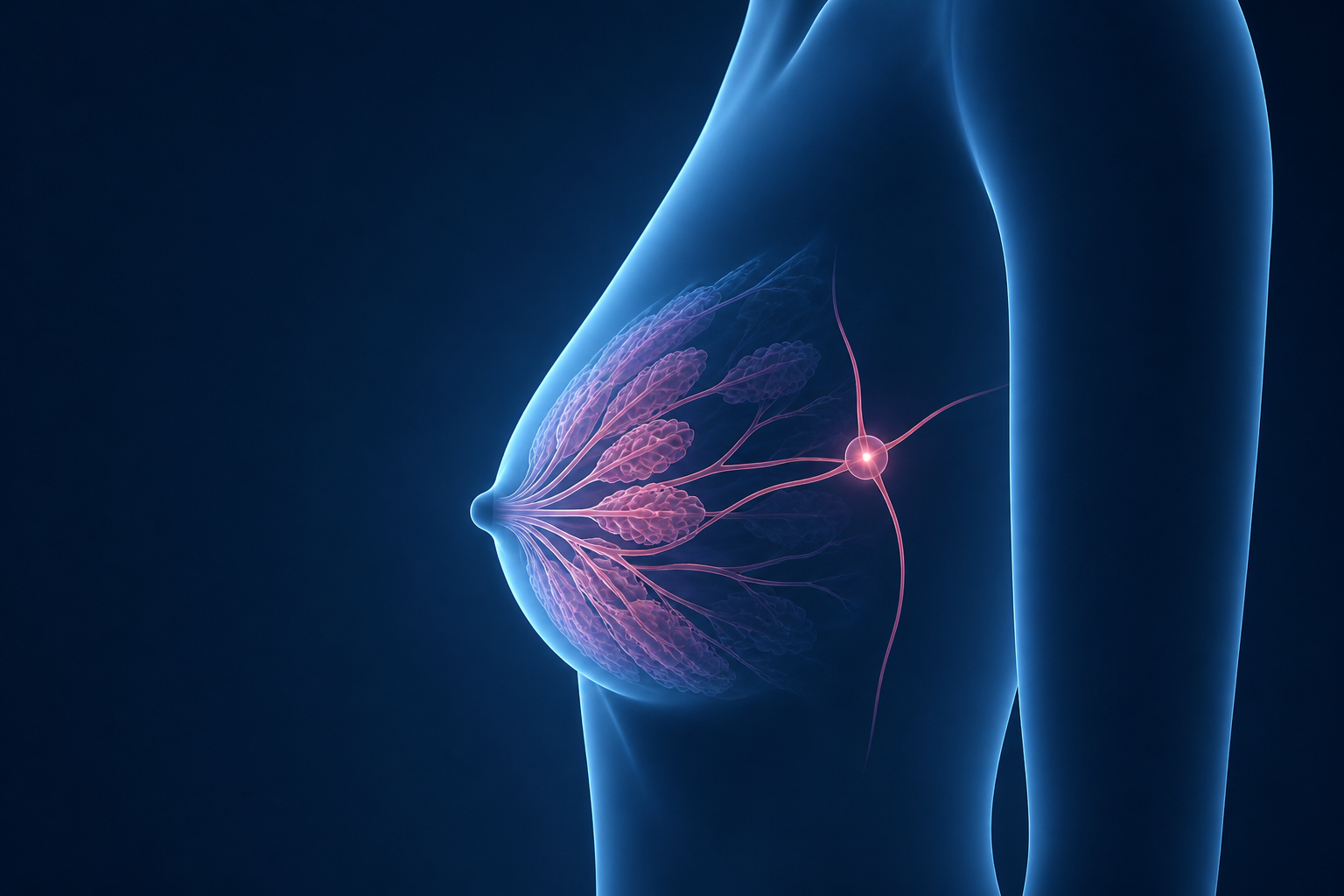
What is a breast ultrasound?
A breast ultrasound uses sound waves to create images of breast tissue. Unlike mammography, it does not use radiation.
Ultrasound is often used to evaluate a specific area of concern, such as a lump felt by the patient or physician, focal pain, nipple changes, or a finding seen on mammography. It is also commonly used to guide procedures such as breast biopsy.
When is breast ultrasound used?
Breast ultrasound is commonly used in the following situations:
- To evaluate a specific abnormality seen on mammography
- To assess a palpable lump felt by the patient or physician
- To determine whether a finding is a fluid-filled cyst or a solid mass
- To evaluate a focal area in patients with dense breast tissue
- To guide needle biopsy or aspiration of a fluid collection
- To assess the axillary (underarm) lymph nodes
Ultrasound is usually a targeted test, meaning it is focused on a specific part of the breast rather than serving as the main screening exam for most patients.
What can ultrasound show that mammography cannot?
Ultrasound is especially helpful because it can show whether an abnormality is fluid-filled or solid. For example, it can often quickly identify a simple cyst, which is a common benign finding.
Ultrasound can also provide detailed evaluation of a focal area that may be difficult to fully characterize on mammography, especially in women with dense breast tissue.
However, ultrasound does not replace mammography, because it is less effective for detecting certain findings, especially calcifications.
Related Topics
Have a breast ultrasound report? A board-certified radiologist with extensive experience in breast imaging reviews every explanation before it reaches you.
Get My Report Explained