
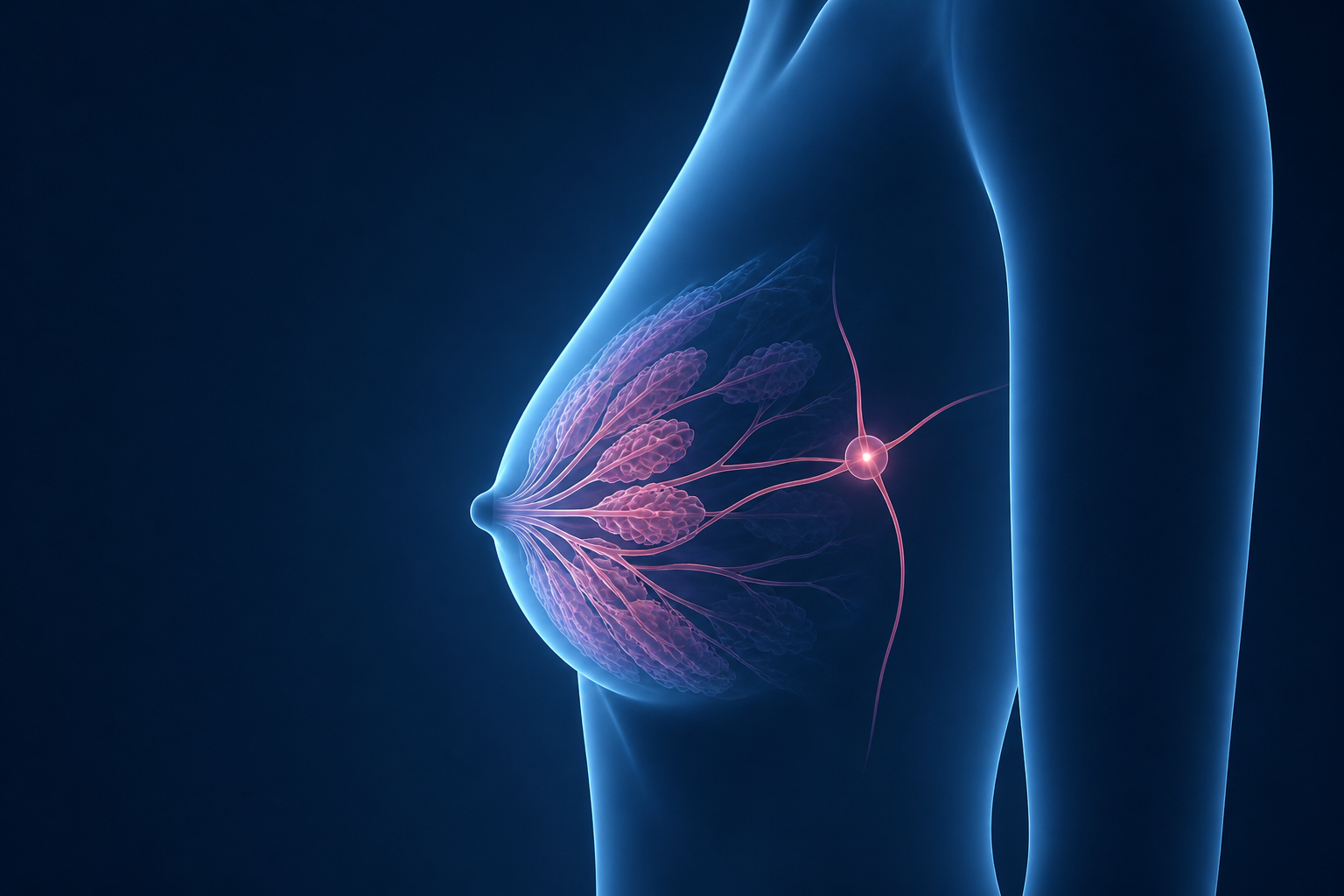
Mammography
Mammography is the primary imaging test used to screen for breast cancer. It uses a low dose of X-ray to look for abnormalities such as masses, asymmetries, architectural distortion, and calcifications. Both standard 2D mammography and 3D mammography (tomosynthesis) are commonly used.
Breast Ultrasound
Breast ultrasound uses sound waves, not radiation, to create images of breast tissue. It is often used alongside mammography to evaluate a specific area of concern, such as a lump, focal pain, or an abnormality seen on a mammogram. Ultrasound is especially useful for distinguishing cysts from solid masses.
Breast MRI
Breast MRI is the most sensitive breast imaging test. It uses a powerful magnet, radio waves, and usually intravenous contrast (gadolinium) to detect abnormalities that may not be visible on mammography or ultrasound. It is most often used for high-risk screening, evaluating the extent of known cancer, implant evaluation, and problem-solving in selected cases.
This service provides educational explanations of radiology reports and does not constitute medical advice, diagnosis, or treatment. Medical decisions should always be made in consultation with your physician.