
A Note from Our Radiologist
DCIS is one of the most important findings we detect through screening mammography - and one of the most misunderstood. Patients often react with fear when they hear the word "carcinoma," which is understandable. What I want you to know is this: DCIS caught on a routine mammogram, before it becomes invasive, represents exactly what screening is designed to do. The conversation you need to have is with a breast surgeon - not about whether you have cancer that has spread, but about the best approach to make sure it never does.
What Is DCIS?
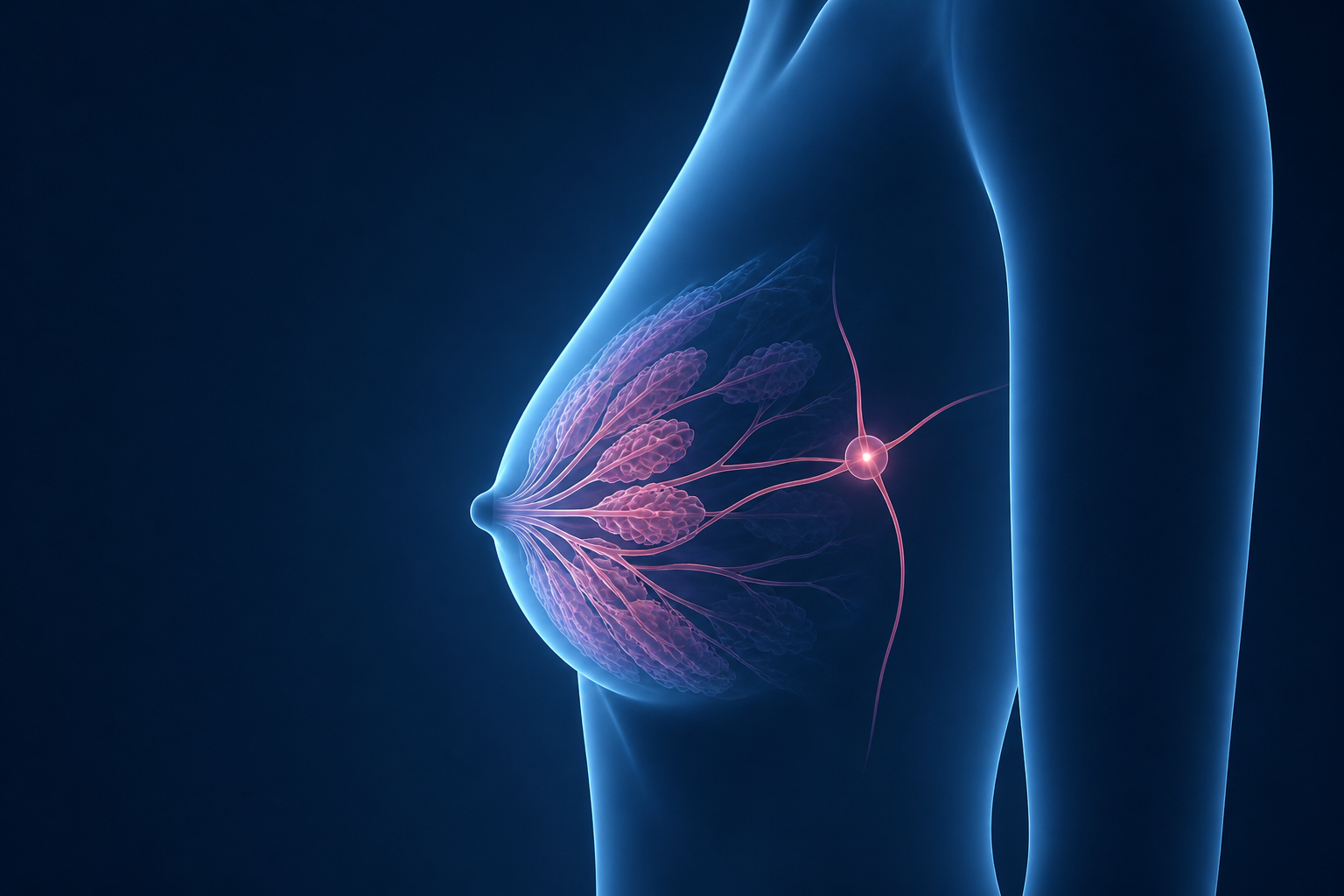
The breast contains a network of milk ducts - small tubes that carry milk from the lobules (milk-producing glands) to the nipple. Ductal carcinoma in situ means that abnormal cells have developed inside one of these ducts. The critical distinction is the phrase in situ - Latin for "in place." The cells have not broken through the duct wall or invaded surrounding breast tissue.
Because the abnormal cells have not invaded surrounding tissue, DCIS is classified as Stage 0 breast cancer - the earliest possible stage. It cannot spread to lymph nodes or other parts of the body as long as it remains truly in situ.
Normal Breast Duct
A healthy milk duct is lined with a single layer of normal epithelial cells. The duct wall (basement membrane) is intact. Cells inside the duct are organized, regular in size and shape, and divide at a controlled rate.
Duct With DCIS
In DCIS, abnormal cells have multiplied inside the duct and fill part or all of the duct's interior. The duct wall (basement membrane) remains intact - the cells have not broken through. This containment is what makes DCIS non-invasive and highly curable.
How is DCIS different from invasive breast cancer?
In invasive breast cancer (also called infiltrating ductal carcinoma), abnormal cells have broken through the duct wall and grown into the surrounding breast tissue. From there, they can potentially reach lymph nodes and travel to other parts of the body. DCIS has not done this. That distinction is the reason DCIS has such a different prognosis and treatment approach than invasive cancer.
How Is DCIS Found?
The vast majority of DCIS is found on screening mammography - often before the woman has any symptoms whatsoever. This is one of the clearest illustrations of why routine mammogram screening saves lives.
On a mammogram, DCIS most often appears as a cluster of tiny calcium deposits called microcalcifications. Not all microcalcifications represent DCIS - many are completely benign - but certain patterns (the arrangement, size, shape, and density of the calcifications) raise enough concern to warrant a biopsy. Your radiologist uses these characteristics, combined with your clinical history, to determine whether calcifications need to be sampled.
Less commonly, DCIS may also appear as a focal asymmetry or mass on the mammogram. Occasionally it is detected on breast MRI performed for high-risk screening. DCIS rarely causes symptoms - a palpable lump, nipple discharge, or skin changes are more associated with invasive cancer or other conditions, though they can occasionally occur with extensive DCIS.
A mammogram finding is not a diagnosis of DCIS
Suspicious microcalcifications on a mammogram lead to a recommendation for biopsy - they do not by themselves confirm DCIS. The diagnosis of DCIS is made only by a pathologist examining tissue obtained at biopsy. If your mammogram report recommends biopsy, that is a next step in evaluation, not a confirmation of cancer.
DCIS Grade - What It Means
Once DCIS is diagnosed on biopsy, the pathologist assigns a nuclear grade - a measure of how abnormal the cells look under the microscope and how quickly they are likely to grow. Grade is one of the most important factors guiding treatment decisions.
Your pathology report may also mention whether necrosis (dead tissue) is present within the duct - this is associated with higher-grade DCIS and is sometimes reflected in the mammographic appearance of calcifications. A subtype called comedo DCIS refers specifically to high-grade DCIS with central necrosis and tends to require more careful management.
Other Important Pathology Terms
In addition to grade, your biopsy and surgical pathology report will contain other information that influences treatment planning. Here are the key terms to understand:
- Size (extent): How large an area of the duct is involved. Larger DCIS (typically over 2 cm) may influence the type of surgery recommended.
- Margins: After surgical removal (lumpectomy), pathologists measure how much normal tissue surrounds the DCIS. A "clear" or "negative" margin means no DCIS cells at the edge of what was removed. A "positive" or "close" margin may mean additional surgery is needed.
- ER/PR status: Whether the DCIS cells have estrogen and/or progesterone receptors. Hormone-receptor positive DCIS may benefit from hormonal therapy (such as tamoxifen or an aromatase inhibitor) to reduce recurrence risk.
- HER2 status: A receptor that affects how aggressively cells grow. Less commonly tested in DCIS than in invasive cancer, but may be relevant in high-grade cases.
How Is DCIS Treated?
DCIS treatment is individualized based on grade, size, margin status, hormone receptor status, and the patient's own preferences and risk tolerance. The main treatment categories are:
Lumpectomy (Breast-Conserving Surgery)
- Surgical removal of the DCIS and a margin of surrounding normal tissue
- The breast is preserved; the goal is clear margins
- Most common surgical approach for DCIS
- Nearly always followed by radiation therapy to reduce recurrence risk
- Requires continued mammographic surveillance after treatment
Mastectomy
- Surgical removal of the entire breast
- Typically recommended for very large or multifocal DCIS, or when clear margins cannot be achieved with lumpectomy
- Also chosen by some patients who prefer to minimize recurrence risk or avoid radiation
- Does not require radiation in most cases
- Reconstruction options are available and can be discussed with a plastic surgeon
Radiation Therapy
- Standard of care following lumpectomy for most DCIS
- Reduces the risk of local recurrence - both DCIS and invasive cancer - in the treated breast
- Typically delivered over 3–6 weeks
- May not be recommended for very small, low-grade DCIS with widely clear margins in older patients
Hormonal Therapy
- Tamoxifen or aromatase inhibitors (for post-menopausal women) may be recommended for hormone-receptor positive DCIS
- Reduces the risk of recurrence in the treated breast and development of new cancer in the opposite breast
- Typically taken for 5 years
- Side effects and individual risk tolerance are important considerations in this decision
Active surveillance - an emerging option for select low-risk DCIS
Several clinical trials (including COMET, LORIS, and LORD) are actively investigating whether a subset of low-grade, hormone-receptor positive DCIS can be safely managed with active surveillance (close monitoring without immediate surgery) rather than surgery. This remains investigational - it is not yet a standard-of-care option outside of a clinical trial - but results so far are promising and may change management recommendations in the coming years. Ask your breast surgeon whether a trial might be appropriate for you.
Why DCIS is treated rather than watched
A common question is: if DCIS has not spread, why not just monitor it? The answer is that we cannot reliably predict which DCIS will progress to invasive cancer and which will not. Estimates suggest that untreated DCIS progresses to invasive breast cancer in approximately 20–50% of cases over 10–20 years. Because we cannot yet identify with confidence which cases are safe to observe, treatment remains the standard recommendation - though this is an active area of research.
Follow-Up After DCIS Treatment
After treatment for DCIS, ongoing surveillance is essential. The goals are to detect any local recurrence early and to monitor the opposite breast. Here is what follow-up typically looks like:
Mammogram of the treated breast at 6 months after completing radiation, then annually thereafter
Annual bilateral mammogram for life. Both breasts require surveillance - the treated side for recurrence, the opposite side for new cancer
Women with DCIS plus high-risk features (BRCA mutation, strong family history, high Tyrer–Cuzick score) may need annual MRI in addition to mammogram
What is the risk of recurrence after DCIS treatment?
After lumpectomy plus radiation, the local recurrence rate for DCIS is approximately 10–15% over 10 years - and roughly half of those recurrences are DCIS again (not invasive cancer). After mastectomy, the recurrence rate is less than 2%. Hormonal therapy, when appropriate, reduces recurrence risk further in hormone-receptor positive cases. These numbers underscore both the effectiveness of treatment and the importance of continued annual mammographic follow-up.
Questions to Ask Your Breast Surgeon
Bring these to your surgical consultation
Frequently Asked Questions
Is DCIS really cancer? Some doctors say it's "pre-cancer."
This is a genuinely contested question in the medical community. Pathologically, DCIS meets the cellular criteria for a carcinoma - but because it has not invaded surrounding tissue, it behaves very differently from invasive cancer and carries an excellent prognosis with treatment. Some experts prefer the term "pre-invasive cancer" or "non-invasive breast cancer." What matters clinically is that the abnormal cells require treatment or very close monitoring to prevent potential progression to invasive cancer. Whether it is called cancer or pre-cancer does not change the management approach.
My biopsy showed DCIS. Does that mean I definitely need a mastectomy?
No - most DCIS can be treated with lumpectomy (removing just the area of DCIS and a margin of normal tissue) followed by radiation, without removing the entire breast. Mastectomy is typically recommended only for DCIS that is very large, involves multiple areas of the breast (multifocal or multicentric), cannot be removed with clear margins by lumpectomy, or in patients who prefer mastectomy to avoid radiation. This decision should be made with a breast surgeon who has reviewed your specific pathology and imaging.
Could my DCIS have already become invasive by the time surgery happens?
It is possible, though not common. When the biopsy sample is small (as with a core needle biopsy), DCIS is sometimes upgraded to invasive cancer when the full surgical specimen is reviewed by the pathologist - not because the cancer spread between biopsy and surgery, but because the invasive component was in a part of the tissue not sampled by the biopsy. This is called "upgrade at surgery" and occurs in approximately 10–20% of DCIS cases. If invasion is found at surgery, the treatment plan will be adjusted accordingly.
Will DCIS affect my ability to breastfeed in the future?
Lumpectomy for DCIS may affect milk production in the operated area, depending on how much tissue is removed and where the DCIS was located. Many women are able to breastfeed from the treated breast, though with potentially reduced milk output on that side. Radiation can further reduce lactation capacity in the treated breast. Mastectomy eliminates breastfeeding from the removed breast. If breastfeeding is a priority, discuss this explicitly with your surgeon before deciding on a treatment approach.
My report says "DCIS with microinvasion." What does that mean?
Microinvasion means that a very small focus of cancer cells (1 mm or less) has broken through the duct wall into the surrounding tissue. This is still a very early finding, but it transitions the case from pure DCIS to a form of very early invasive cancer. It may change management - specifically, sentinel lymph node biopsy is more likely to be recommended when microinvasion is present, and additional staging considerations may apply. Your breast surgeon will address this at your consultation.
Does having DCIS mean I have a higher risk of cancer in my other breast?
Yes, somewhat. A prior diagnosis of DCIS slightly increases your lifetime risk of developing a new cancer in the opposite (contralateral) breast compared to the general population. This is one reason annual bilateral mammography continues for life after DCIS treatment. If you also have high-risk features - BRCA mutation, dense breasts, significant family history, or a high Tyrer–Cuzick score - supplemental breast MRI screening may be recommended for the contralateral breast.
Should I get a second opinion on my DCIS pathology?
Second opinions on breast pathology are reasonable and accepted practice, particularly for DCIS. The grade assignment and margin interpretation can have meaningful implications for your treatment plan, and expert breast pathologists at major academic centers sometimes reach different conclusions than community hospitals - especially for borderline or intermediate-grade cases. Many breast surgery programs will arrange pathology review as part of their intake process.
Related Topics
Have a breast imaging or biopsy report that mentions DCIS? A board-certified radiologist with extensive subspecialty experience in breast imaging reviews every explanation before it reaches you.
Get My Report Explained