0
Stage Zero
Non-Invasive, Also Called In Situ
Abnormal cells are still contained inside a duct, as in DCIS. They have not grown into surrounding breast tissue. Stage 0 is usually very treatable.

A calm, patient-friendly guide to what breast cancer means, how it starts, common types, what “invasive” means, and how staging helps guide care.
Browse Breast TopicsBreast cancer happens when cells in the breast begin growing in an abnormal and uncontrolled way. Normally, cells follow carefully regulated instructions that tell them when to grow, divide, and stop growing. Sometimes changes occur in those instructions, called genetic mutations, and cells continue multiplying when they should not. Over time, this can form a lump or abnormal area called a tumor.
Importantly, not every lump or abnormal finding in the breast is cancer. Many breast findings are benign, meaning non-cancerous. Benign findings do not invade nearby tissue or spread to other parts of the body.
A malignant tumor, or cancer, behaves differently. It has the potential to grow into surrounding breast tissue and, in some cases, spread to lymph nodes or other parts of the body. This is why biopsy, pathology results, and staging are so important when cancer is suspected or diagnosed.
Hearing the words “breast cancer” can understandably feel frightening. But breast cancer is also one of the most treatable cancers, especially when found early. Advances in mammography, breast MRI, surgery, radiation therapy, and medications have greatly improved outcomes. Many people diagnosed with breast cancer go on to live long, healthy, active lives.
Breast cancer means breast cells are growing in an uncontrolled way. Not all breast lumps are cancer, and not all breast cancers behave the same way. The type, receptor markers, and stage help your care team choose the most appropriate treatment plan.
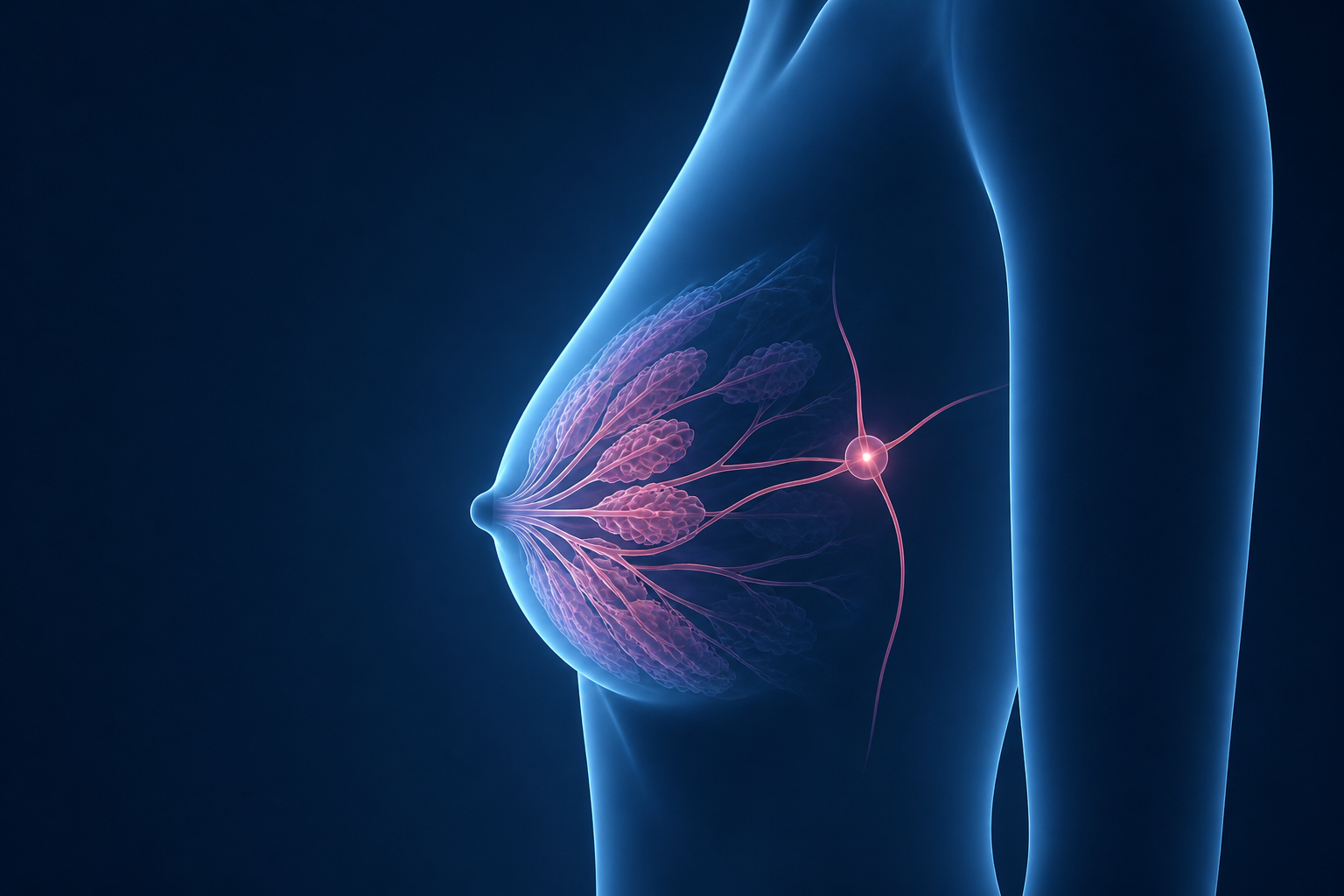
The breast is made up of different types of tissue, including lobules, which are milk-producing glands, and ducts, which are tiny tubes that carry milk toward the nipple. Many breast cancers begin in the cells lining the ducts or lobules.
Cancer usually does not happen all at once. It develops after a cell collects enough genetic changes that it no longer follows the body’s usual controls. That cell may keep dividing, and over time it can form an abnormal area or tumor.
A simple way to think about this is that healthy cells have both “accelerators” and “brakes.” Some genes tell cells when to grow. Other genes help slow growth down or repair damage. Cancer can develop when the growth signals become too active or the brakes stop working properly.
Some genes help cells grow and divide. If these signals become overactive, cells may multiply faster than they should. HER2 is one example of a growth-related marker that can be important in some breast cancers.
Other genes help repair DNA damage or slow abnormal growth. BRCA1 and BRCA2 are examples of protective genes. Inherited changes in these genes can increase a person’s lifetime risk of breast and ovarian cancer.
Most breast cancers are not caused by an inherited gene mutation. Many develop from genetic changes that happen over a person’s lifetime. Family history and inherited mutations are still important, but they are only one part of breast cancer risk.
At an early stage, abnormal cells may remain contained inside a duct or lobule. This is called in situ, meaning “in place.” If the cells break through the wall of the duct or lobule and grow into nearby breast tissue, it is called invasive breast cancer.
Breast cancer is not just one disease. Different types can behave differently and may require different treatments. Your pathology report may describe where the cancer started, whether it is invasive, and whether certain markers are present on the cancer cells.
The first important distinction is whether the cancer is invasive or non-invasive. Non-invasive cancer is still contained where it started. Invasive cancer has grown into surrounding breast tissue.
The most common type of invasive breast cancer. It starts in a milk duct and then grows through the duct wall into nearby breast tissue. Treatment depends on the size, lymph node status, and tumor markers.
This type starts in the lobules, the milk-producing glands. It can be harder to see on imaging because it may grow in a more subtle, spreading pattern rather than forming a distinct round lump.
Abnormal cells are present inside the milk ducts but have not broken through into nearby breast tissue. DCIS is often called Stage 0 breast cancer. It is highly treatable, but treatment is usually recommended because some DCIS can progress over time.
Despite the name, LCIS is usually considered a marker of increased future breast cancer risk rather than a true invasive cancer. It means abnormal cells are present in the lobules and may lead to closer monitoring or risk-reduction discussions.
This means the cancer cells do not have estrogen receptors, progesterone receptors, or HER2 overexpression. It can grow more quickly than some other types, but treatment options such as chemotherapy and immunotherapy may be effective.
A rare and aggressive type of breast cancer that can cause redness, swelling, warmth, or thickening of the breast skin. It may look like an infection, so prompt medical evaluation is important when these symptoms occur.
The word “invasive” can sound very alarming, but it has a specific medical meaning. It does not automatically mean the cancer is advanced or that it has spread throughout the body.
In breast cancer, “invasive” means cancer cells have broken through the wall of the duct or lobule where they started and have grown into the surrounding breast tissue. Many invasive breast cancers are still found early, before they have spread to lymph nodes or other parts of the body.
One way to picture this is to imagine a duct like a small tube. With in situ cancer, the abnormal cells are still inside the tube. With invasive cancer, the cells have moved through the wall of the tube into the tissue around it.
Once cancer cells are in breast tissue, they have the potential to travel to nearby lymph nodes or, in more advanced cases, to other organs. This is why your doctors look carefully at lymph nodes, imaging, biopsy results, and pathology findings when determining the stage.
Invasive cancer cells have the ability to travel, but many invasive cancers are found before that happens.
Where many breast cancers begin
Invasive cells grow into nearby breast tissue
Nearby underarm nodes are often checked first
In advanced cases, cancer may spread elsewhere
Many invasive breast cancers are diagnosed at an early stage and are very treatable. “Invasive” describes that cancer cells have moved into surrounding breast tissue. The stage tells your doctors how much cancer is present and whether it has spread.
Staging is how doctors describe how much cancer is present and where it is located. It helps guide treatment planning and gives your care team a shared way to describe the cancer.
Staging may use information from imaging, physical exam, biopsy results, and surgery. Sometimes the stage is estimated before surgery and then updated after surgery when more detailed pathology information is available.
Breast cancer staging often uses the TNM system:
The size of the main tumor in the breast and whether it involves nearby skin or chest wall structures
Whether cancer is found in nearby lymph nodes, most commonly under the arm
Whether cancer has spread to distant parts of the body, such as bones, liver, lungs, or brain
Doctors also consider other important details, including the grade of the cancer, hormone receptor status, and HER2 status. These details can affect treatment options and sometimes influence the final stage.
Abnormal cells are still contained inside a duct, as in DCIS. They have not grown into surrounding breast tissue. Stage 0 is usually very treatable.
The cancer is small and either has not spread to lymph nodes or has only a very tiny amount of lymph node involvement. Treatment outcomes are often excellent.
The tumor may be larger, or cancer may be found in a small number of nearby lymph nodes. Many Stage II cancers are still treated with the goal of cure.
The cancer may involve more lymph nodes, the skin, or chest wall area. Treatment is often more intensive, but it can still be very effective.
Cancer has spread beyond the breast and nearby lymph nodes to another part of the body. Stage IV breast cancer is not usually considered curable, but it is treatable. Many people live with metastatic breast cancer for years with ongoing care.
If you have been diagnosed with breast cancer, these questions can help you better understand your specific situation:
Part of the UnderstandMyScan Education Platform
This is one example of the physician-developed patient education available through an UnderstandMyScan breast center partnership.
Explore More Sample Education Explore a Partnership